
by Dr. Furkan Yousaf
Librarian, Directorate of Monitoring and Evaluation, Law and Parliamentary Affairs, Lahore, Pakistan
1. Introduction: A Dream Realized
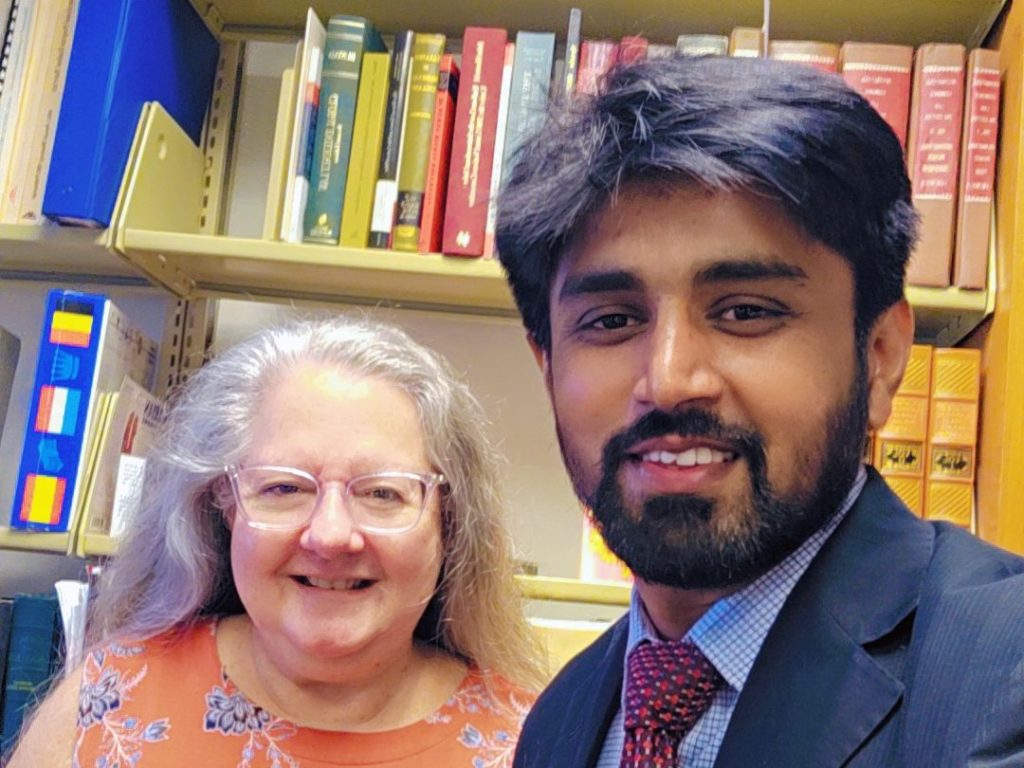
I am writing this with a heart full of gratitude and a mind buzzing with new perspectives. Recently, I had the distinct honor and life-changing opportunity to attend the International Association of Law Libraries (IALL) 43rd Annual Course in Houston, Texas, USA.
Winning the 2025 IALL Grant for Non-Members was more than just receiving a scholarship; it was the opening of a door I had long hoped to walk through. This grant provided me with free registration and the means to participate in a world-class gathering hosted by The Fred Parks Law Library at South Texas College of Law Houston from October 19–23, 2025.
The theme of the conference allowed me to explore Houston’s incredible development from its humble beginnings as a “Frontier Town” to its current status as a global center for exploration in the “Final Frontier.” This journey was made possible by the visionary leadership of Mark Engsberg, President of IALL, the tireless efforts of Local Planning Committee Co-Chair Monica Ortale, IALL Grants Committee Chair Vanessa Blackmore, and IALL Treasurer Jean M. Wenger.
I must extend my deepest thanks to the members of the Local Planning Committee (LPC), whose hospitality and organization were nothing short of flawless. This experience would not have been possible without the generous support of Annual Course sponsors Wolters Kluwer Legal & Regulatory and LLMC.
(Image by courtesy of the author)
2. From Pakistan to the Lone Star State: The Great Crossing
For a professional coming from Pakistan, traveling to the United States is not merely a flight; it is a transition between worlds. My journey began with a mix of anxiety and immense hope. Applying for the IALL grant was a leap of faith, and when the news arrived that I had won, it felt like a miracle. However, the road was not without its hurdles.
The process of securing a USA visa was a test of patience, as the approval came very late, leaving me with little time to prepare for what would be my first-ever long-haul international journey. The travel itself was an odyssey. Flying with Emirates, I departed from Lahore, Pakistan, for a 3.5-hour flight to Dubai. After a brief layover, I boarded the marathon 16.20-hour flight to Houston, USA.
While the service was luxurious, the physical toll of a 12-hour time difference is significant. I arrived in Houston three days before the conference began (a strategic move to allow my body and mind to align with the US clock). Navigating the jet lag was a challenge, but the excitement of being in a developed country, witnessing the vast difference in infrastructure, culture, and pace of life acted as the perfect remedy for exhaustion.
3. The Contrast of Cultures: A Developing Perspective in a Developed World
Stepping onto American soil for the first time, I was immediately struck by the scale of Houston. In Pakistan, our beauty lies in our ancient history, vibrant street life, and close-knit communal ties. In Houston, I saw a different kind of beauty: the beauty of organization, the majesty of skyscrapers, and the efficiency of a city built on the promise of the future.
For someone from a developing nation, being in the USA provides a unique lens through which to view “possibility.” There is a profound cultural difference in how space, time, and professional services are managed. Houston, known as the “Energy Capital of the World“ and “Space City,” embodies the spirit of exploration. Seeing the integration of technology and tradition in a developed society inspired me to think about how we can implement similar structures of efficiency in our own law libraries back home.
4. Conference Overview: Learning at the Intersection of Law and Space
The 43rd Annual Course was a masterclass in professional development. The program was meticulously curated to cover the most pressing issues in international legal information.
The curriculum didn’t just focus on books and databases; it focused on leadership and innovation. We delved into the legal complexities of the space industry fitting for a city that houses NASA and explored how legal libraries must evolve in the age of Artificial Intelligence and global digital shifts. Every session over the four days was enlightening, featuring speakers who are the “north stars” of our profession.
Key Learnings and Highlights: Navigating the Legal Frontier
Several sessions stood out as transformative for my professional growth:
4.1. The Legalities of the Final Frontier
Given Houston’s identity, the sessions on Space Law were a highlight. Understanding the international treaties governing celestial bodies and the growing commercialization of space was fascinating. It reminded me that as law librarians, our jurisdiction is no longer just terrestrial; we must be prepared to research laws that extend beyond our atmosphere.
4.2. Artificial Intelligence and the Future of Legal Research
The conference addressed the elephant in the room: AI. We discussed how generative AI is changing the way lawyers work and, consequently, how librarians must curate and verify information. The consensus was clear: AI is a tool for the brave, and as leaders, we must master it to remain the gatekeepers of truth.
4.3. Sustainability in Law Libraries
Another critical topic was the sustainability of legal collections. In a world moving toward digital-first, how do we preserve the “frontier” history of law while making it accessible to a global audience? The discussions on digital preservation and open access provided me with practical strategies to bring back to Pakistan.
5. A Glimpse into the Future: The Harris County Robert W. Hainsworth Law Library
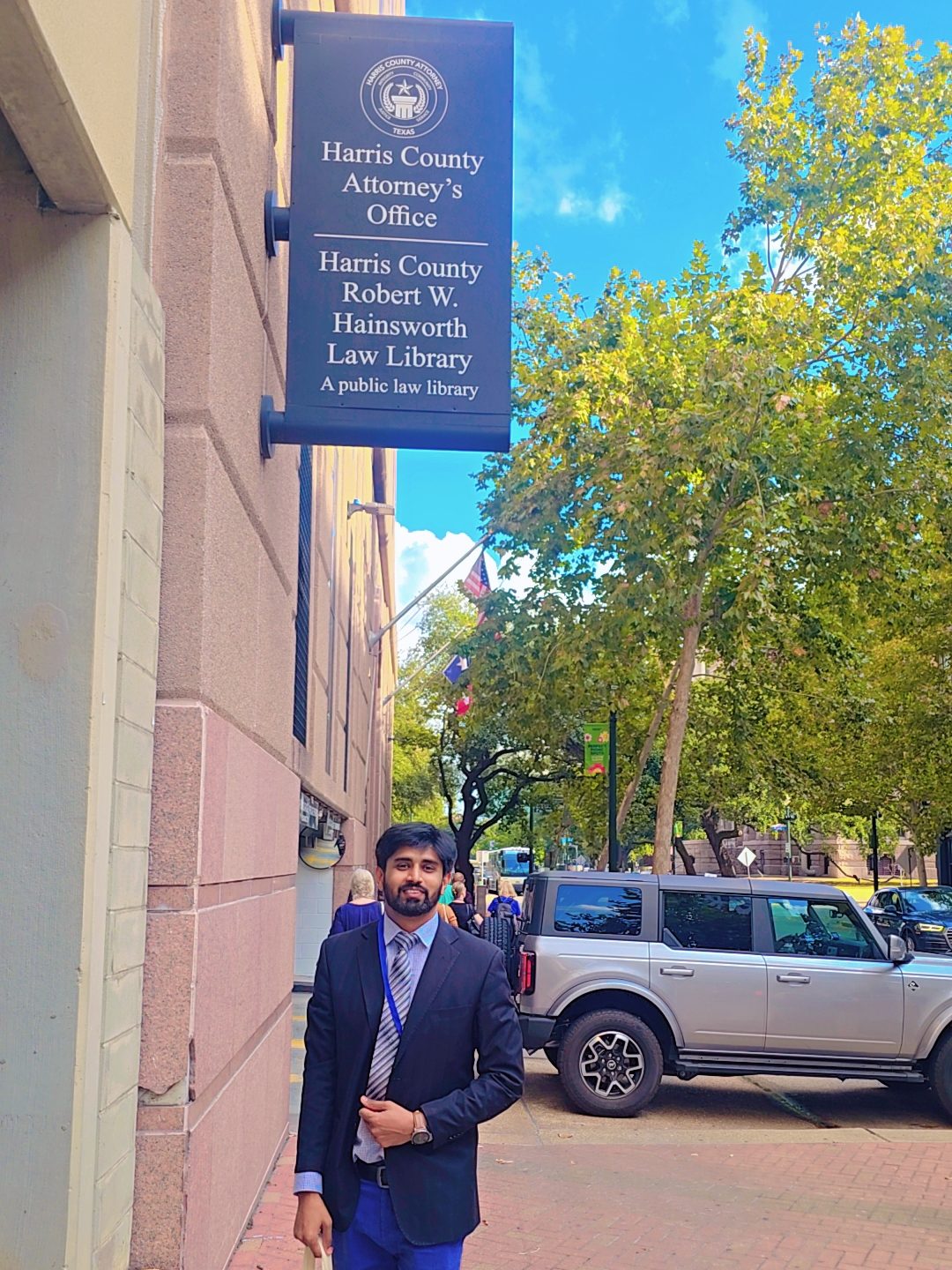
A standout moment of the conference was joining the wonderful IALL team for a visit to the Harris County Robert W. Hainsworth Law Library. This public law library serves as a cornerstone of “Access to Justice” in Houston.
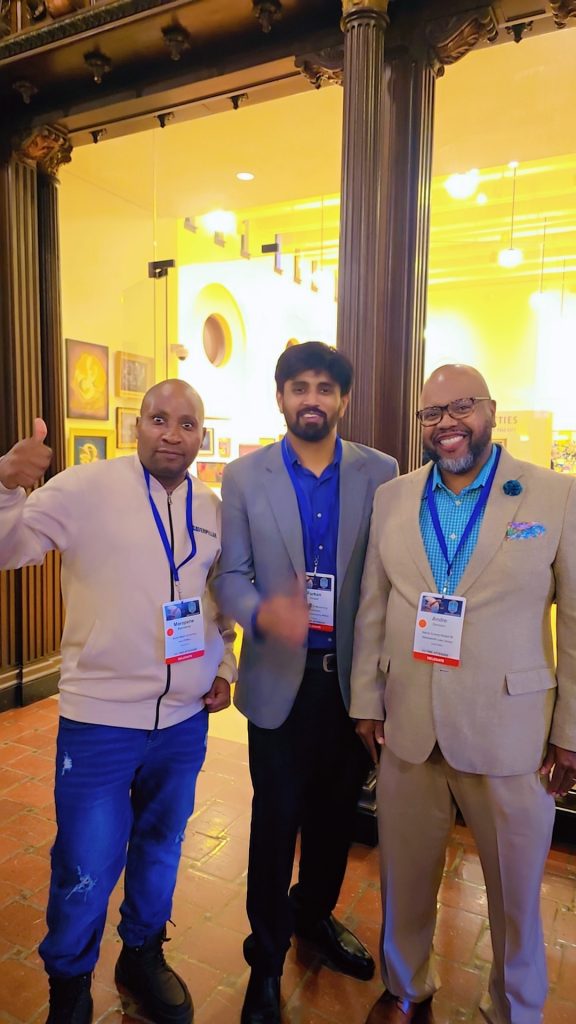
We were warmly welcomed by Library Director Andre Davison, who personally led us on a comprehensive tour of the facility. It was an eye-opening experience to see how a public legal institution operates at such a high level of efficiency. A highlight of the tour was seeing the LAWPods—innovative, soundproof, and sound-dampening workspaces equipped with high-tech computer stations. These pods allow patrons to connect with law librarians via video, conduct private research, and even attend virtual court hearings. Seeing this level of technological integration to help self-represented litigants was truly inspiring and gave me a blueprint for how we might bridge the justice gap in our own communities.
(Image courtesy the author)
6. Networking and Global Engagement: A Borderless Profession
One of the most valuable aspects of the IALL conference was the networking. I found myself in conversations with professionals from Germany, South Korea, South Africa, Australia, the UK, and across the Americas.
As a grant winner from Pakistan, I was a bridge between two different worlds of legal librarianship. I discovered that while our resources may differ, our challenges are universal: the need for better information literacy, the struggle for budget recognition, and the passion for providing justice through information. These interactions transformed my professional network into a global family.
7. Social Activities: NASA, Line Dancing, and The Rustic
A conference is only as good as the bonds it builds, and the 2025 Annual Course excelled in fostering community. The social program was a vibrant tapestry of Texas culture.
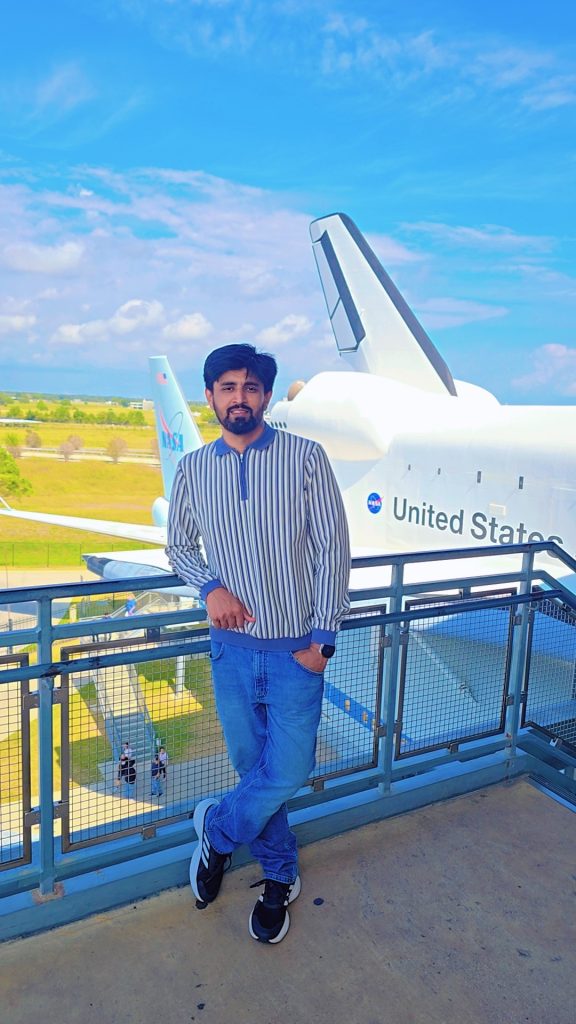
One of the most unforgettable experiences was our visit to NASA Johnson Space Center. Standing where history was made and seeing the technology that put humans on the moon was a surreal moment. It reinforced the conference theme: the journey from the frontier to the stars.
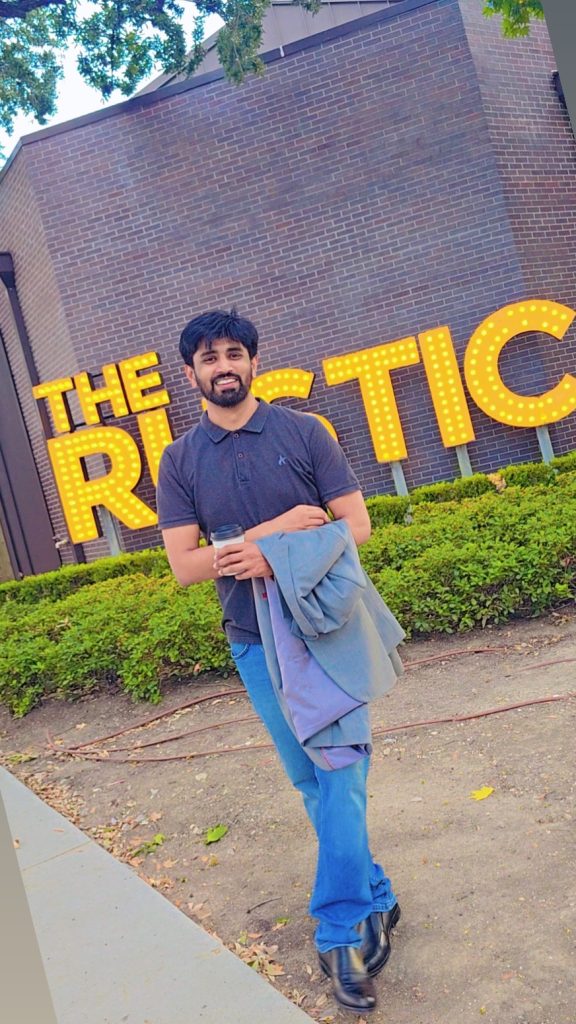
The cultural immersion continued at The Rustic. If you haven’t seen a group of international law librarians attempting line dancing, you haven’t lived! It was a night of laughter, “Texas-sized” hospitality, and wonderful drinks. This experience broke down professional barriers, allowing us to connect as human beings. I realized that whether we are in Lahore or Houston, a good meal and a dance can bring the world together.
(Image by courtesy of the author)
(Image by courtesy of the author)
(Image by courtesy of the author)
8. Reflections and Conclusion: A Journey of Hope
As I reflect on my journey from Pakistan to Houston, I am reminded of why I applied for this grant in the first place: Hope.
I hoped to learn, and I did. I hoped to lead, and I found the inspiration to do so. I hoped to improve the law libraries in my home country, and I am returning with a briefcase full of ideas and a heart full of courage. This journey has taught me that leadership and innovation know no borders.
The transition from a developing country to a developed one for a brief week allowed me to “time travel” into the future of our profession. I learned that while we may be separated by 12,000 miles and 12 time zones, the pursuit of legal excellence is a shared human endeavor.
To those considering applying for future IALL grants: do it. Even if the visa is late, even if the flight is 15 hours, and even if the jet lag is daunting—the transformation you will undergo is worth every mile.
Thank you, Houston. Thank you, IALL. This is not the end of my journey; it is simply the launchpad for a new mission to improve legal information access in Pakistan and beyond.
9. About the Author
Dr. Furkan Yousaf is a distinguished professional in the field of legal information and a proud 2025 IALL Grant Recipient. He is deeply committed to bridging the gap between developing and developed legal systems through the strategic use of technology and visionary leadership.
This Blog contains entries by members of the International Association of Law Libraries on issues germane to the Association’s areas of focus. Views expressed in an individual entry only represent the views of the author, and not those of the International Association of Law Libraries or the author’s employer.