Reflections of an IALL 2026 Professional Development Grant Recipient
by Adama Kone, Head of the Library and Archives Center at the National Assembly of Côte d’Ivoire
How can legal information professionals in Africa help make legal knowledge more accessible, visible, and useful?
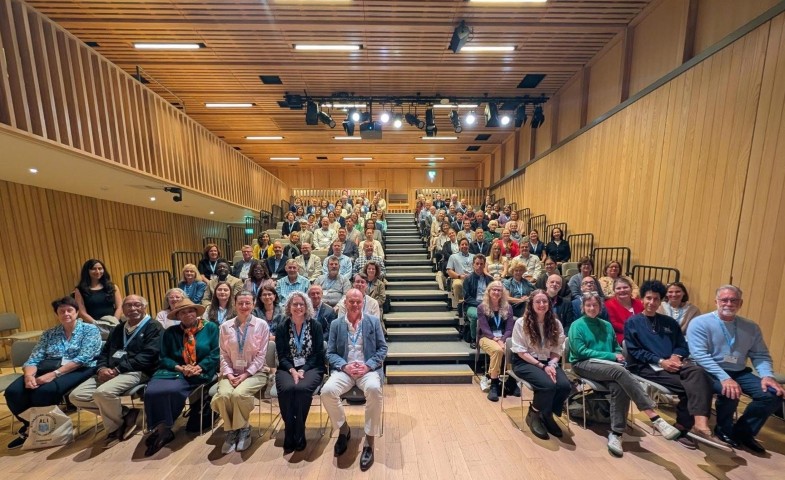
I brought this question with me to Cambridge, England, for the 44th Annual Course of the International Association of Law Libraries (IALL), held September 13–16, 2026.
My sincere thanks to the IALL Grants Committee, I was the recipient of an IALL Professional Development Grant. I joined colleagues from around the world and saw, once again, the value of international professional exchange and learning.
For me, Cambridge was about more than attending a conference—it was about bringing knowledge back home and sharing it with, and beyond Côte d’Ivoire.
Cambridge: learning in a living environment
The setting itself was inspiring. In Cambridge, universities, libraries, and centuries of intellectual history exist side by side. Walking through the historic colleges and libraries reminded me that knowledge institutions are more than buildings full of documents. They help societies to preserve, organize, and pass on knowledge.
As Head of the Library and Archives Centre of the National Assembly of Côte d’Ivoire, I found this entire experience to be particularly meaningful.
The IALL programs and presentations covered a rich array of topics: legal information, parliamentary research, archives, digital transformation, artificial intelligence, and emerging technologies.
One session of particular relevance to my work was the pre-conference workshop “From Evidence to Influence: Packaging Research for Parliamentary Impact,” led by Claire Sewell, Head of Research Information Service at the House of Commons Library. Sewell’s presentation raised a central question for information professionals: how do we move beyond managing information to producing information that truly supports institutional decision-making? For parliamentary libraries and documentation services in Africa, this question is extremely crucial.
Legal information in a changing environment
The Annual Course programs addressed a wide range of issues, including constitutional change, Brexit, international and comparative law, legal research, and the changing role of law libraries. The session “Brexit: Ten Years On” reminded me that parliamentary and legal documents are more than technical records. They capture how institutions, legislation, political debates, and society change over time.
Another timely and important discussion focused on artificial intelligence and legal research. In “Legal AI: Research, Data, Readership and Libraries,” Professor Felix Steffek explored the opportunities and challenges that AI creates for legal information professionals. AI can improve discovery, retrieval, and analysis; however, it also raises questions about reliability, bias, copyright, transparency, and from where information comes. My biggest takeaway from this session is that AI cannot replace good information infrastructure.As AI systems increasingly rely on existing information, what matters more than ever are reliable metadata, well-organized collections, digitized documents, sound preservation systems, and clear provenance. This has direct implications for African legal information institutions. If we want our legislation, parliamentary records, and legal heritage to be visible in tomorrow’s information systems, we must organize, preserve, and make them accessible today.
Archives, memory and knowledge justice
Another memorable session was “Courts, Bishops and Boxes: Inside the Archives of the Diocese of Ely at Cambridge University Library,” presented by archivist Kevin Roberts. This session reminded me that archives are not only about the past. What we preserve today shapes what researchers, institutions, and citizens will be able to understand tomorrow. The session “The Law Library Through a Decolonial Lens: Knowledge Justice, Sites of Memory and Acts of Resistance” also invited us to reflect on whose knowledge is visible, whose history is represented, and how collections are described and made accessible. All these questions resonate strongly in Africa. African legal and parliamentary information exists in many forms and institutions, but it is often quite difficult to find, access, or use internationally. Changing this is not just a technical issue; it is also a matter of professional responsibility and knowledge equity.
From Abidjan and Dakar to Cambridge
My connection with this international community of legal and parliamentary information specialists and librarians did not begin in Cambridge. In 2016, I was a part in the IFLA Law Libraries Section workshop on Open Access to Legal Information in Africa, held in Kampala, Uganda, and partially organized and funded by IALL. This groundbreaking workshop brought together people from at least 15 African nations, who are committed to improving access to legal information and strengthening cooperation among African law library and information professionals. The momentum from this week-long workshop continued with another similar workshop, held in Dakar, Senegal, in 2018. This workshop was in French, and librarians from most of the Francophone African countries were in attendance. Looking back at these two workshops, I see them both as vital and major milestones in my career. Both these workshops taught that international cooperation is most meaningful when it builds life-lasting professional relationships. This spirit lives on today through networks such as the Association of African Law Library and Information Professionals (AfLLIP) and through African professionals’ ongoing engagement with IALL, and other international organizations such as IFLA, SCECSAL, etc.
For all these reasons and points of information mentioned, I do not want my Cambridge experience to remain a purely personal one. I want to share everything I learned with all my colleagues in Côte d’Ivoire, across Francophone Africa, and with throughout the rest of the African nations.
An invitation to Francophone and all African colleagues
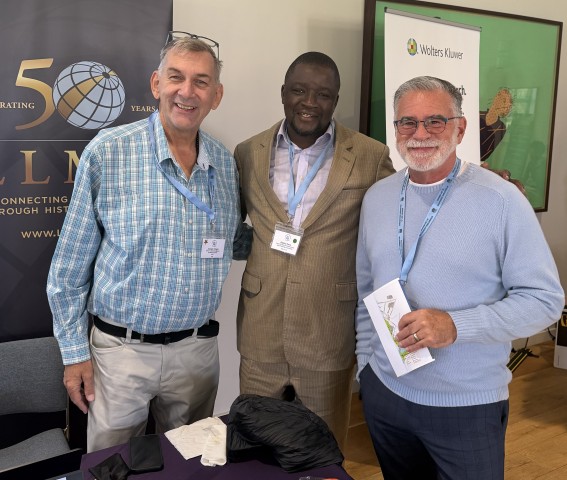
I would like to encourage colleagues from Francophone Africa and all the other African nations to discover IALL and take part in its Annual Courses and activities. International professional associations can seem distant or hard to reach, but my experience shows that opportunities open up when we ourselves take the initiative: participate, submit papers, build relationships, and apply for grants.
The professional development opportunities of IALL can make a real difference. My own participation in Cambridge, England, made possible by an IALL Professional Development Grant, allowed me to learn from colleagues working in different professional and legal settings, to make new contacts and colleagues, and to bring fresh perspectives back to my professional community. My message to colleagues is simple: Do not assume that international opportunities are meant for someone else. You must apply. When calls for grants and professional programs are announced, take action. Join in on discussions that come in many forms. Present your country’s experience. Share your challenges and innovations. When any opportunity comes your way, share what you learn with others.
From individual opportunity to collective impact
For me, the most important lesson I have learned in Cambridge is that international professional development should not be a one-way process in which African professionals only receive knowledge from international organizations. We need to make this a two-way exchange. Africa has legal information resources, expertise, institutional experience, and perspectives that deserve to be better known, and disseminated internationally. We should not only learn from others; we should also bring our own experiences to the table. This means strengthening cooperation among law libraries, parliamentary libraries, archives, universities, and other professional networks.
We must also make African legal information more discoverable and accessible. By doing so, we are preserving our documentary heritage so that future generations can have access to it, study it, and learn from it. It is our role to ensure that African perspectives are part of conversations about digital transformation, artificial intelligence, open access, and the future of legal information.
Bringing Cambridge home
I returned to Côte d’Ivoire a long list of ideas that apply directly to my work:
- strengthening parliamentary information services;
- making legal and parliamentary resources better organized and more accessible;
- developing sustainable digital preservation;
- exploring responsible uses of artificial intelligence (AI);
- expanding professional cooperation.
I also returned with something less tangible but perhaps much more important: a stronger belief that professional networks can multiply the impact of individual opportunities. A grant can support one person. A conference can inspire one professional. But, shared knowledge can reach many more people. This is why I don’t see my Cambridge experience as the end of a journey but as one more step in connecting Côte d’Ivoire, Francophone Africa, continental Africa, and the wider international community of legal information professionals.
My physical time in Cambridge has ended, but the work of sharing what I learned has only just begun!
This Blog contains entries by members of the International Association of Law Libraries on issues germane to the Association’s areas of focus. Views expressed in an individual entry only represent the views of the author, and not those of the International Association of Law Libraries or the author’s employer.